Digital Marketing Trends
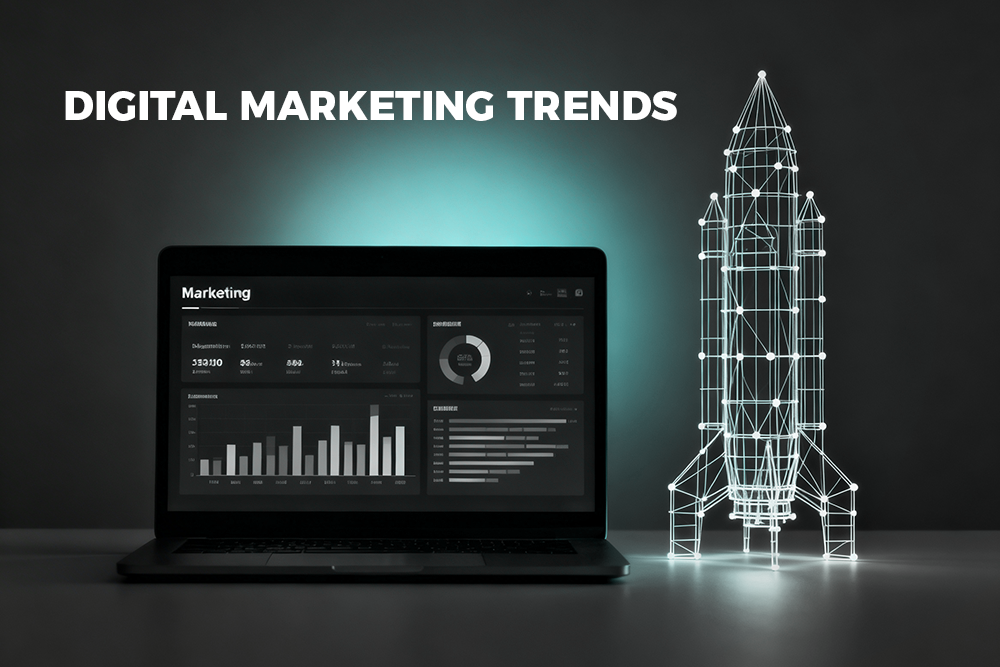
If you tried to use a 2024 marketing playbook today, it would probably feel like trying to run modern software on a flip phone. The digital landscape hasn't just changed; it has undergone a total transformation. We’ve moved past the era of simply "using" tech as a tool. We’re now in a space where artificial intelligence and human intuition have finally stopped competing and started collaborating. This year’s marketing trends aren't about who can shout the loudest with the biggest ad spend; they’re about who can build the most genuine connection.
The Role of AI and Automation Nowadays
By now, AI in marketing isn't that shiny new toy we’re all just "testing out", it’s the engine under the hood of every high-performing brand. But the "how" has shifted significantly. We’ve moved away from basic generative tools that just churn out text and toward "Agentic AI." These are intelligent agents that don't just suggest ideas; they actually execute complex tasks across the entire customer journey with minimal hand-holding.
Marketing automation nowadays has also become much more human. It’s no longer about setting up those rigid, "one-size-fits-all" email sequences that everyone ignores. Today’s systems sense a user’s intent in real-time and pivot the message accordingly. As marketers, our jobs have evolved from being the ones pulling every single lever to being the architects of the experience. By letting AI handle the heavy lifting of data processing, we finally have the breathing room to focus on what we do best: telling stories that actually make someone feel something.
Data Privacy, First-Party Data, and Trust-Based Marketing
Nowadays, trust is the only currency that actually matters. People are tired of being "tracked" by invisible bots; they want to be "known" by the brands they love. This is why the most successful marketing trends this year all point back to First-party and Zero-party data information that customers choose to share because they trust you.
To win today, transparency is a competitive advantage, not just a legal requirement. Smart brands are leaning into a "Privacy-by-design" (ensuring privacy through the design of the system itself) approach. We’ve stopped looking at data protection as a hurdle and started seeing it as a way to respect our audience. When a customer knows their information is safe and that you’re only using it to make their life easier, they don't just buy, they stay.
Social Platforms, Short-Form Content, and Community Growth
The "post-and-pray" era of social media marketing is officially over. While short-form video still rules the feed, the "vibe" has shifted. People are exhausted by over-produced, "perfect" ads. They’re scrolling past the polished commercials and stopping for the raw, "behind-the-scenes" moments that feel like they were filmed by a friend, not a department.
Community is the new reach. Instead of chasing a million lukewarm followers, the most successful brands now are cultivating tight-knit groups of advocates. We’re seeing a massive rise in micro and nano-influencers, not because they have the most followers, but because they have the most trust. Social platforms aren't just where people go to kill time anymore; they’re where they go to learn, belong, and buy, all in a single, seamless flow.
The bottom line: Digital marketing isn't about outsmarting the algorithm. It’s about using the algorithm to be more human, more often, for the right people.
Frequently Asked Questions
What are the most important digital marketing trends nowadays?
It’s a mix of Agentic AI, community-led growth, hyper-personalized short-form video, and a "trust-first" approach to data. Essentially, we’re moving from mass broadcasting to meaningful, 1-on-1 conversations at scale.
How can businesses adapt to privacy-focused marketing changes?
Stop relying on third-party data and start building your own "data house." Focus on your CRM, be radically transparent about your data usage, and give people a real, valuable reason to want to stay in your ecosystem.
Why is AI becoming essential in digital marketing strategies?
The sheer volume of data nowadays is too much for any human team to handle manually. AI allows us to process insights in seconds, enabling the kind of hyper-personalization that actually boosts conversion rates and keeps customers from feeling like just another number in a database.
26 Mar 2026
To share